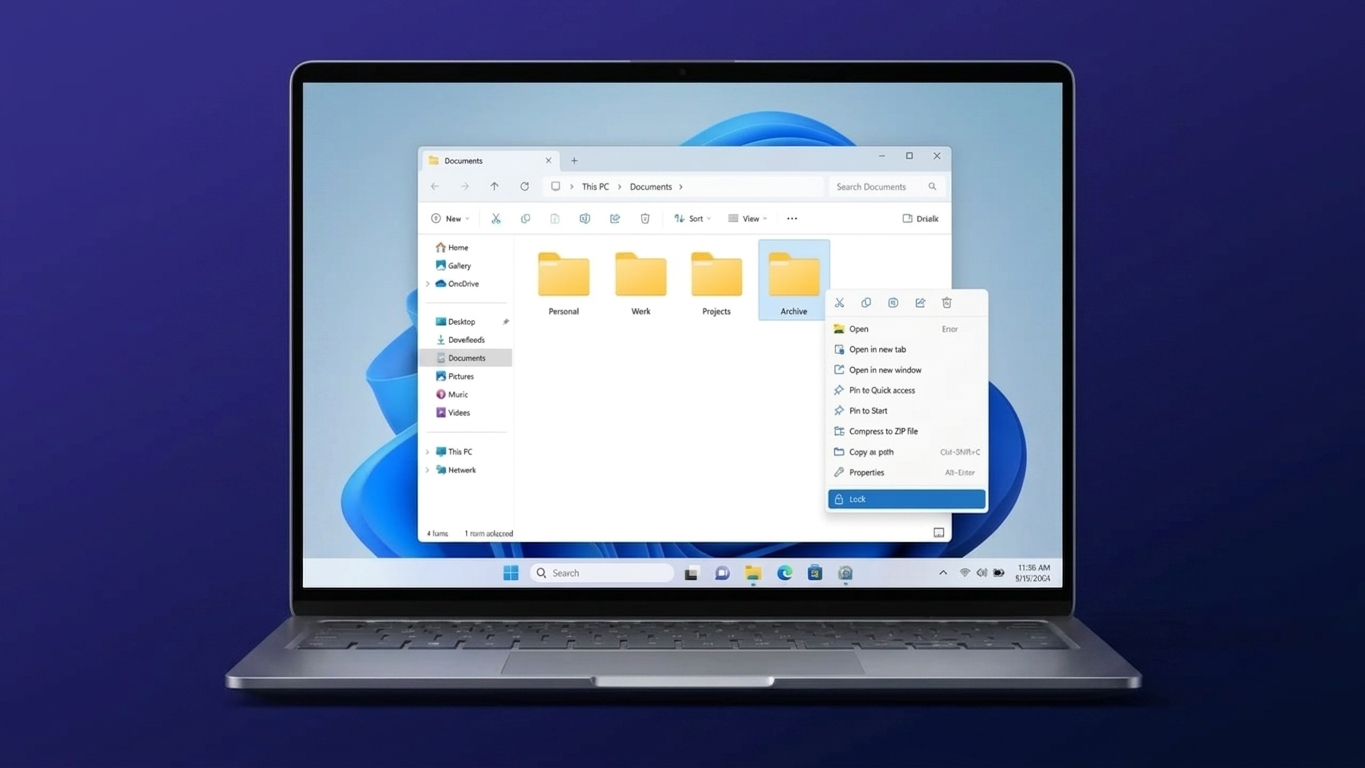
If you store personal documents, photos, financial records, or work files on your computer, protecting them from unauthorized access is a smart idea. Whether you share your PC with family members or simply want an extra layer of privacy, Windows 11 offers multiple ways to keep your folders secure.
You can use Windows’ built-in encryption features or choose reliable third-party software for password protection. The right option depends on how much security and convenience you need.
Also Read: How to Turn On Spotify Lossless Audio on Android, iPhone, and PC
Key Takeaways
- Windows 11 includes built-in security features for protecting files and folders.
- BitLocker and Encrypting File System (EFS) provide strong encryption for supported devices.
- Third-party folder lock applications offer password protection and additional privacy features.
- Strong passwords, regular backups, and securely storing recovery keys improve data security.
Built-in Ways to Protect a Folder in Windows 11
Windows 11 includes several security features that help prevent unauthorized access to your files. Some options are available only on specific Windows editions or drives formatted with the NTFS file system.
Encrypt a Folder Using Encrypting File System (EFS)
Encrypting File System (EFS) allows you to encrypt individual folders and files. Once encrypted, the data can only be accessed by your Windows user account unless you explicitly share the encryption certificate.
Steps to enable EFS:
- Right-click the folder you want to secure.
- Select Properties.
- Under the General tab, click Advanced.
- Check Encrypt contents to secure data.
- Click OK, then select Apply.
- Choose to apply encryption to the folder and all its contents.
- When prompted, back up your encryption certificate and recovery key to a safe location.
After encryption is enabled, any new files saved inside that folder are automatically encrypted as well.
Note: EFS protects your files from other Windows user accounts, but anyone who can log into your account can still open them. Using a strong Windows password is therefore essential.
Secure an Entire Drive with BitLocker
If your goal is to protect everything stored on a drive instead of just one folder, BitLocker is a better choice.
BitLocker encrypts the entire drive, making your data inaccessible without proper authentication.
To enable BitLocker:
- Sign in using an administrator account.
- Open Settings.
- Navigate to Privacy & Security.
- Turn on Device Encryption if your PC supports it.
- If available, open BitLocker Drive Encryption from Control Panel.
- Select the drive you want to encrypt.
- Choose a strong password or PIN.
- Save the recovery key in a secure location.
- Select your preferred encryption options and start the encryption process.
Many modern computers use a Trusted Platform Module (TPM) to enhance BitLocker security. You can check TPM availability by running tpm.msc from the Run dialog.
Password Protect Individual Documents
Sometimes you only need to secure a few important documents instead of locking an entire folder.
Several popular applications include built-in password protection.
For example:
- Microsoft Word can encrypt documents with a password.
- Microsoft Excel supports password-protected workbooks.
- Adobe Acrobat allows password protection for PDF files.
After enabling password protection, remember to save the document so the security settings are applied.
Use Third-Party Folder Lock Software
If you prefer password-protected folders instead of Windows account-based encryption, several trusted applications are available.
Some well-known options include:
- Folder Lock
- My Lockbox
- VeraCrypt
- AxCrypt
- 7-Zip
- WinRAR
These tools often provide additional features such as:
- Password-protected folders
- Encrypted storage containers
- Hidden vaults
- Secure file encryption
- Password-protected archives
Before installing any security software, always download it from the developer’s official website to reduce security risks.
How to Lock a Folder with Folder Guard
Folder Guard is a dedicated folder protection utility that lets you restrict access using passwords and customizable permissions.
Basic setup:
- Install and launch Folder Guard.
- Choose the folder you want to protect.
- Enable password protection.
- Create a strong password.
- Save your settings.
After setup, the protected folder will require the correct password before anyone can access it.
Additional features may include:
- Automatic locking after use
- Master password management
- Different passwords for different users
- Read-only access options
- Easy password updates or removal
- Protection for folders shared over local networks
Any files placed inside the protected folder inherit the selected security settings.
Best Practices for Keeping Your Files Safe
No matter which protection method you choose, following good security habits will help keep your information secure.
- Use long, unique passwords.
- Store recovery keys somewhere safe.
- Keep Windows updated with the latest security patches.
- Install updates for your security software regularly.
- Avoid sharing passwords unnecessarily.
- Create backups of important files using trusted storage solutions.
Which Method Should You Choose?
The best option depends on your needs.
| Method | Best For |
|---|---|
| Encrypting File System (EFS) | Protecting individual folders tied to your Windows account |
| BitLocker | Encrypting an entire drive for maximum security |
| Password-Protected Documents | Securing Word, Excel, or PDF files |
| Third-Party Folder Lock Software | Users who want password-based folder access and additional privacy features |
Also Read: How to Stop Video Autoplay in Google Discover on Android
Final Thoughts
Windows 11 offers multiple ways to protect sensitive data, from encrypting individual folders to securing entire drives. If the built-in tools meet your needs, they provide reliable protection without installing additional software. Users looking for password-based folder locking or extra privacy features can also consider reputable third-party solutions.
Whichever method you choose, combining strong passwords, regular backups, and safe storage of recovery keys will significantly improve the security of your personal files.
Advertisements