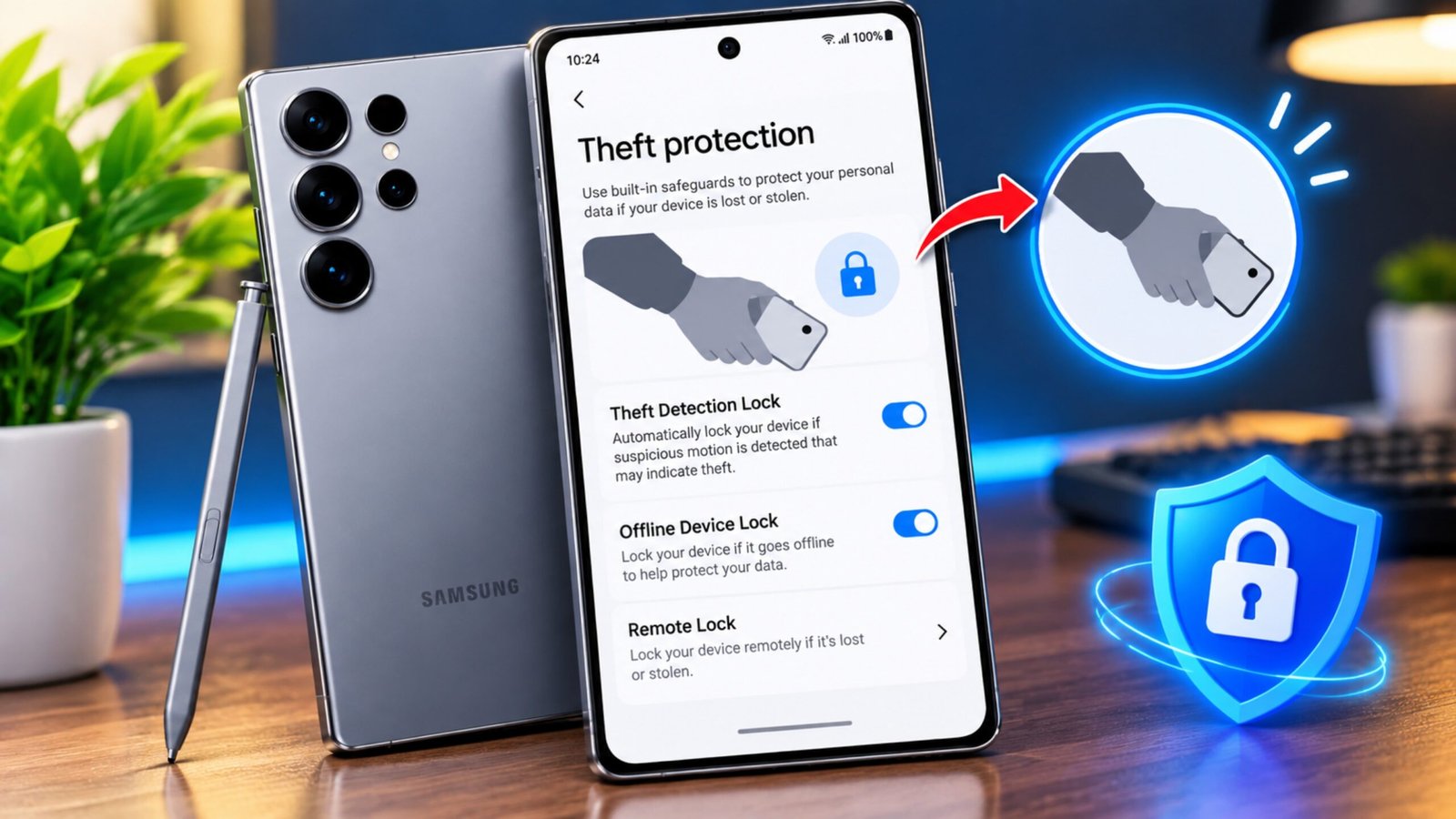
Your smartphone contains much more than photos and contacts. It may also have access to emails, social media accounts, payment apps, private conversations, documents, and other personal information. That is why losing an unlocked phone can be a serious privacy concern.
Android has built-in theft protection features that are designed to make unauthorized access more difficult. One of them is Theft Detection Lock, which can automatically lock the screen when the phone detects movement that could indicate someone has suddenly taken it.
Here’s how the feature works, how to enable it, and what other Android theft protection tools you can use.
Also Read: How to Back Up iPhone 16: Simple Ways to Keep Your Data Safe
What Does Theft Detection Lock Do?
Theft Detection Lock is designed to protect an Android phone when it is suddenly taken while being used.
For instance, suppose you are holding your unlocked phone and someone grabs it from your hand. Android can use the device’s sensors and detection systems to identify movement associated with a possible theft. If the situation matches the conditions supported by the feature, the phone can automatically lock its screen.
After that, the person with the phone would need your normal screen-lock method to access the device again.
This can be helpful because an unlocked phone may provide access to things such as:
- Photos and videos
- Messages and emails
- Social media accounts
- Banking and payment apps
- Personal documents
- Saved account information
- Other apps containing private data
It is worth remembering that this feature does not stop someone from physically stealing your phone. Its purpose is to add another layer of protection for your information.
Is Theft Detection Lock a Tracking Feature?
No. Theft Detection Lock is primarily a security feature, not a phone-tracking service.
It uses information from the device to detect movement that may be associated with a theft. It is separate from Google’s tools for finding a missing device.
If your phone is lost or stolen, Google’s Find Hub can provide supported options for locating and managing the device.
Steps to Enable Theft Detection Lock
The exact menu can differ depending on your Android version, phone manufacturer, and device model.
On supported phones, you can generally check the following location:
- Open Settings.
- Tap Google.
- Select All services.
- Find Theft protection.
- Tap Theft Detection Lock.
- Turn on the available option.
Once enabled, the feature can operate in the background without requiring you to manually activate it whenever you use your phone.
If you don’t see these options, look through Security and privacy in Settings. Some manufacturers may organize Android security features differently.
Other Theft Protection Tools on Android
Theft Detection Lock is only one part of Android’s broader security system. Depending on your phone and software version, additional options may be available.
Offline Device Lock
A stolen phone may lose its internet connection if someone disconnects mobile data or Wi-Fi.
Offline Device Lock is designed to add protection in situations where the device remains offline. Under supported conditions, Android can automatically lock the phone.
This gives you another layer of protection when the device cannot maintain an internet connection.
Remote Lock
Remote Lock is useful when you realize that your phone has gone missing but it has not already been secured automatically.
On supported devices, you can use the relevant remote-locking service to secure the phone from another device.
This can be particularly useful if you notice the loss several minutes after it happens.
Find Hub
Find Hub is Google’s service for managing lost Android devices.
Depending on your device and its configuration, it can offer features for locating a missing phone, securing it, or remotely erasing its data.
Because Find Hub and Theft Detection Lock serve different purposes, they should not be considered replacements for one another.
Why Offline Device Lock Can Be Helpful
Internet connectivity can be important when managing a missing smartphone remotely.
For example, if someone takes your phone and it becomes disconnected from Wi-Fi and mobile data, certain remote actions may not work immediately.
Offline Device Lock is intended to provide additional protection in such circumstances by automatically locking the device when its supported conditions are met.
In simple terms:
Theft Detection Lock focuses on suspicious physical movement, while Offline Device Lock focuses on situations where the phone goes offline.
When Remote Lock Can Be Useful
Not every phone goes missing in an obvious way.
You might leave your smartphone in a shop, vehicle, office, or another location and only realize later that it isn’t with you. By the time you notice, the phone may still be unlocked.
Remote Lock can give you another way to secure a supported device without physically having it in your hands.
It can therefore act as an additional option when automatic theft protection has not already locked the phone.
Theft Protection Cannot Guarantee Recovery
Android’s theft protection features are mainly intended to protect your data and make unauthorized access harder.
They cannot physically prevent someone from taking your phone, and enabling them does not guarantee that you will recover a stolen device.
Each feature has a different role:
- Theft Detection Lock: Automatically locks the device when supported theft-like movement is detected.
- Offline Device Lock: Adds protection when the device remains offline under supported conditions.
- Remote Lock: Allows a supported missing device to be locked remotely.
- Find Hub: Provides tools for locating and managing a missing device.
The availability and behavior of these features can vary between phones.
Your Screen Lock Still Matters
Even with Android’s theft protection features enabled, you should continue using a secure screen lock.
A strong PIN or password, along with supported biometric authentication, can make unauthorized access more difficult.
Theft Detection Lock should be viewed as an additional security layer, rather than a replacement for your regular lock screen.
For example, if you are using your phone outdoors and somebody suddenly takes it from your hand, the automatic locking feature may help protect the device after the suspected theft is detected.
Why Is Theft Detection Lock Missing on My Phone?
If you cannot find the setting, it does not necessarily mean that there is a problem with your smartphone.
Android features can vary depending on several factors, including:
- Android version
- Phone model
- Manufacturer
- Region
- Google Play services
- Available software updates
A phone running a relatively recent Android version may still not have every theft protection option available on another device.
Google and smartphone manufacturers can also change feature availability through software updates.
What to Check If You Don’t See the Feature
If Theft Detection Lock isn’t showing up, try these basic steps:
- Check for available Android system updates.
- Update Google Play services if an update is available.
- Restart your phone.
- Make sure your Google account is properly signed in.
- Open Settings > Google > All services and check for theft protection.
- Check Security and privacy for additional security options.
If the feature still isn’t available, your particular device or software configuration may not currently support it.
There is no need to assume that your phone is faulty simply because the option appears on another Android device.
How to Disable Theft Detection Lock
If you don’t want to use the feature, you can generally turn it off from the same area where it was enabled.
Go to:
Settings > Google > All services > Theft protection > Theft Detection Lock
Then switch the feature off.
Depending on the phone manufacturer and Android version, the menu may be arranged differently. In that case, search for Theft protection under Settings or check the Security and privacy section.
Theft Detection Lock vs. Find Hub
These two features are designed for different purposes.
Theft Detection Lock is focused on automatically securing the phone when Android detects movement that may indicate a sudden theft.
Find Hub, on the other hand, is intended for finding and managing a missing device and may provide options such as locating, locking, or remotely erasing the phone when the required conditions are met.
So, having one does not make the other unnecessary.
Can Android Theft Protection Recover a Stolen Phone?
There is no guarantee that theft protection features will help you recover a stolen phone.
Find Hub may provide location and device-management options when the required settings and conditions are available, but factors such as connectivity, device configuration, and other circumstances can affect what you can do.
For that reason, it’s better to configure your security features before your phone goes missing rather than trying to set everything up afterward.
Android Theft Protection Checklist
Take a few minutes to review the security options available on your phone.
- Turn on Theft Detection Lock if supported.
- Enable Offline Device Lock if available.
- Set up Remote Lock.
- Keep Find Hub enabled.
- Use a strong PIN or password.
- Keep Android updated.
- Install available security updates.
- Keep Google Play services updated.
- Make sure you can access your Google account when necessary.
These settings cannot guarantee that a lost or stolen smartphone will be recovered. However, they can give you additional ways to protect your personal information and manage the device if something goes wrong.
Also Read: How to Use Your iPhone or Android Phone as a Mobile Hotspot
Final Thoughts
Theft Detection Lock is a useful security option for supported Android devices. Instead of requiring you to manually lock the phone after every possible incident, it can automatically secure the screen when Android detects movement that may indicate a sudden theft.
It isn’t a tracking tool and doesn’t replace Find Hub. Rather, it works alongside other Android security features to provide additional protection for your device and personal information.
If the option is available on your phone, it’s worth checking the theft protection settings now. Setting them up in advance can be much more useful than trying to configure security options after the phone has already gone missing.

Sourav Gorai, founder of sabhigyan.com, is passionate about technology, smartphones, apps, and digital tools. With 8+ years of experience in the digital and tech space, he focuses on creating easy-to-understand, practical, and helpful content that makes everyday technology simpler for readers.